Diesel Coolant System Failure in Phoenix Summer Heat: Warning Signs, Prevention, and When to Call Mobile Repair
In Phoenix, cooling system problems show up fast once summer hits full strength. When ambient temps push past 110°F and the truck is crawling through afternoon traffic on I-10, Loop 101, or Loop 202, your margin for error disappears. A hose that held pressure in March can fail in June. A radiator that was “good enough” in mild weather can run out of capacity in stop-and-go heat.
For fleet owners, this is not just a repair issue. It is an uptime and cost control issue. One overheated unit can trigger missed loads, driver delays, tow coordination, and major engine risk if the truck is kept in service too long.
If you have already built a seasonal plan, this guide goes deeper on one system that causes some of the most expensive summer failures. Start with this focused coolant checklist, then pair it with your broader Phoenix summer diesel maintenance plan.
Why Phoenix Heat Accelerates Coolant System Failure
Phoenix does not “cause” bad parts, but it exposes weak cooling systems earlier and harder than most markets.
1) Higher baseline operating temperature
When outside air is hot, the radiator has less temperature difference to work with. The cooling system can still do its job, but it has to work harder for the same result. Any restriction, weak fan clutch, internal scaling, or low coolant level gets amplified.
2) Thermal cycling all day long
Fleet trucks in metro service often cycle between highway pull and idle-heavy work: yard moves, loading queues, fuel stops, and traffic choke points. That constant heat-up and cool-down cycle stresses hoses, clamps, seals, and plastic tanks. Parts that seem stable under steady cruise conditions fail earlier under repeated thermal swings.
3) Coolant reserve drops faster in extreme heat
High heat and high pressure events can slowly reduce reserve in the overflow bottle over time, especially when minor seepage exists at clamps, fittings, or aging hose connections. A truck may run for days while “just needing top-off,” then suddenly overheat in traffic when reserve is gone.
4) Idle time is more punishing in summer
Many overheat events in Phoenix do not start at highway speed. They start at idle: parked with A/C demand, waiting at docks, or moving slowly through congestion. Airflow across the cooling stack drops, under-hood heat rises, and marginal components fail first.
Warning Signs Your Coolant System Is Near Failure
Cooling system failures usually throw signals before they become a full breakdown. The goal is to catch these in the warning phase.
Temperature gauge creep
If the gauge is consistently trending higher than normal during the hottest part of the day, treat it as an active warning. The most common pattern is normal temps at speed, then rising temp in low-speed traffic or idle. That pattern points to reduced cooling efficiency, fan/airflow issues, or low reserve.
Do not normalize this as “summer behavior.” A healthy system should manage summer heat without repeatedly creeping toward the red zone.
Sweet coolant smell around the cab or engine bay
A sweet odor often indicates hot coolant vapor from a small external leak. In Phoenix heat, tiny leaks become bigger quickly because pressure events are more frequent. The leak may not leave a large puddle at first, but the system is already losing control margin.
White smoke or steam from the engine area
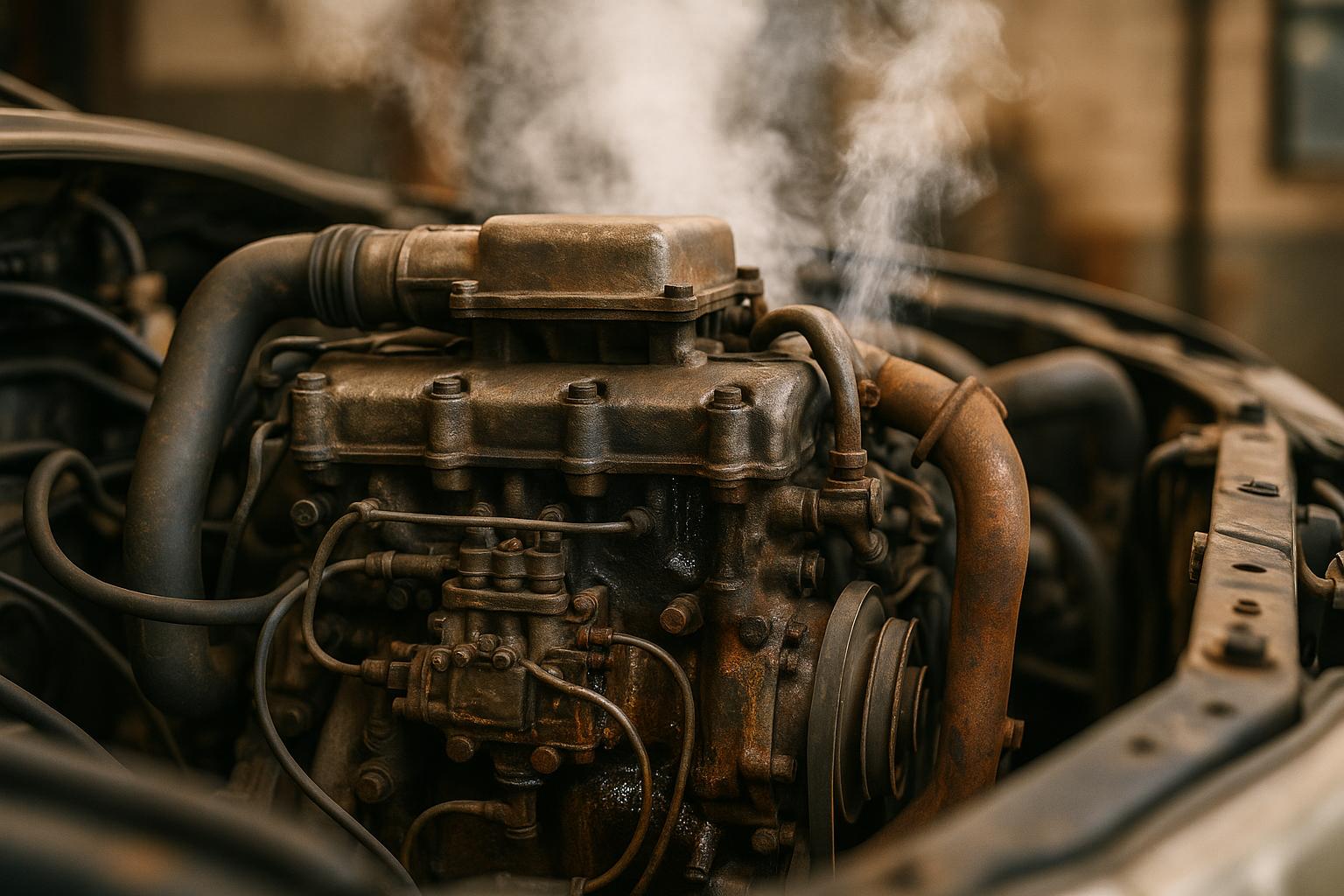
Sudden white vapor after a temperature spike usually means coolant is contacting hot engine components or escaping under pressure. This is a pull-over-now condition. Keep driving and you move from a manageable cooling repair into possible head gasket, cylinder head, or liner damage.
Visible coolant leaks, residue, or crust
Look for wet spots, dried residue, or white/green crust around hose ends, radiator seams, water pump weep areas, and surge tank fittings. On fleets, these signs are often caught during quick lot inspections if techs know what to look for.
Overheating at idle, but recovering at speed
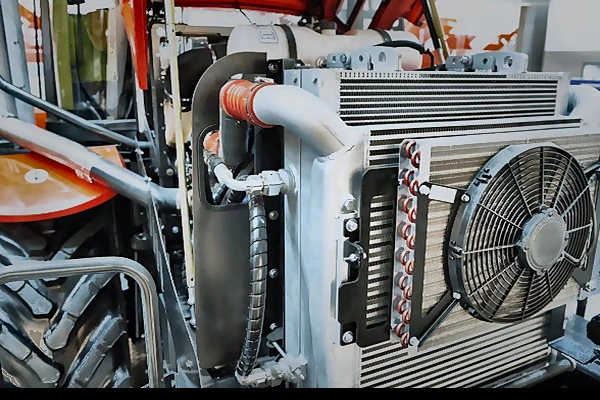
This symptom is common in Phoenix summer operations. If temperature climbs in traffic and drops once airflow improves, the truck is warning you that the cooling system has little reserve left. Fan performance, radiator airflow, and stack cleanliness all need inspection before the next route.
For a broader early-warning framework across systems, review 5 signs your fleet needs mobile diesel repair.
What to Do When a Truck Starts Running Hot
Overheat response has to be consistent across drivers and dispatch. A bad decision in the first five minutes can turn a repair call into an engine replacement discussion.
- Safely move out of traffic as soon as possible.
- Reduce load and idle time; do not keep pushing the truck under heavy throttle.
- Shut down if temperature continues rising or warning lights/alarms are active.
- Do not open a hot radiator or surge tank cap.
- Document what happened: location, gauge behavior, warning lights, visible leaks, and any smoke/steam.
- Dispatch mobile service immediately if there is active overheating, coolant loss, or visible leak.
If the unit is disabled roadside or unsafe to continue, call emergency roadside diesel service instead of trying to limp the truck across Phoenix traffic.
Preventive Maintenance Plan for Phoenix Cooling Systems
A good plan is simple, repeatable, and tied to actual operating conditions. This schedule works for most Phoenix commercial fleets and owner-operators:
Daily and pre-trip (driver level)
- Check coolant level in the surge/overflow tank when safe and cool.
- Inspect under-truck parking spots for new coolant drips.
- Note any sweet smell, gauge changes, or warning light activity.
- Report trends immediately, not after the route.
Weekly during peak heat months (May through September)
- Inspect hose condition: soft spots, cracks, bulges, clamp slippage.
- Check radiator and charge air cooler stack for debris blockage.
- Verify fan operation behavior during warm idle.
- Confirm no repeated top-off pattern on the same unit.
At each PM interval
- Pressure test the cooling system and cap performance.
- Inspect water pump for bearing noise or seepage.
- Evaluate thermostat behavior through operating temp trend, not guesswork.
- Check belt condition and tension on fan/water pump drive systems.
- Inspect for internal contamination signs in coolant.
Seasonal prep (March-April in Phoenix)
- Test coolant condition and concentration; replace if out of spec.
- Clean and inspect the full cooling stack before first extreme-heat weeks.
- Replace aging hoses and clamps proactively on higher-mileage units.
- Prioritize trucks running the harshest stop-and-go city routes.
After any overheating event
- Do not return the truck to full duty based on cooldown alone.
- Verify root cause before release: leak source, airflow issue, cap failure, pump issue, thermostat behavior, or other system fault.
- Re-check for secondary damage after repair.
If your team needs field service for this work, mobile A/C and cooling system repair can handle most inspections and corrective repairs at your yard or jobsite.
Overheating Cost vs Preventive Service Cost
Most operators already know preventive maintenance is cheaper, but coolant failures are where the gap gets especially large.
Preventive cooling service is planned work: controlled labor window, scheduled unit downtime, and parts replaced before failure cascades. Overheating events are unplanned and compounding: roadside delay, potential tow, missed delivery windows, and the risk of major engine damage if operation continues while hot.
Even when an overheat incident does not destroy the engine, it can still create follow-on reliability problems. Once a truck has been run too hot, you often spend additional time and labor chasing secondary issues that would not exist if the first warning signs had been handled earlier.
If your current process is mostly reactive, tightening coolant inspections is one of the fastest ways to reduce summer downtime without guessing at broad cost-cutting changes.
When to Call Mobile Diesel Repair Instead of “Watching It”
Call mobile service now, not later, when any of these are true:
- Temperature gauge is climbing beyond normal and not stabilizing.
- You smell coolant repeatedly after routes.
- You see active coolant leak, steam, or fresh residue buildup.
- Truck overheats at idle in traffic or yard operations.
- Driver has to top off coolant repeatedly between PM checks.
Waiting can make a simple hose, clamp, cap, or pump issue turn into a much larger repair. In Phoenix summer, heat load is too high to gamble on “one more run.”
If your unit is already down or you need fast diagnosis on-site, call before moving the truck further.
Need Diesel Cooling System Repair in Phoenix?
AZ Mobile Diesel Repair supports fleet and owner-operator coolant system issues across the Valley, including I-10, Loop 101, and Loop 202 corridors.
Call (602) 456-9071 for:
- Cooling system diagnostics at your location
- Hose, clamp, thermostat, and water pump repair
- Radiator and coolant leak troubleshooting
- Same-day mobile service during business hours
Prefer to submit details first? Use the contact form and include truck location, symptoms, and whether the unit is currently overheating.