Mobile vs Shop Diesel Repair: Which Saves Money?
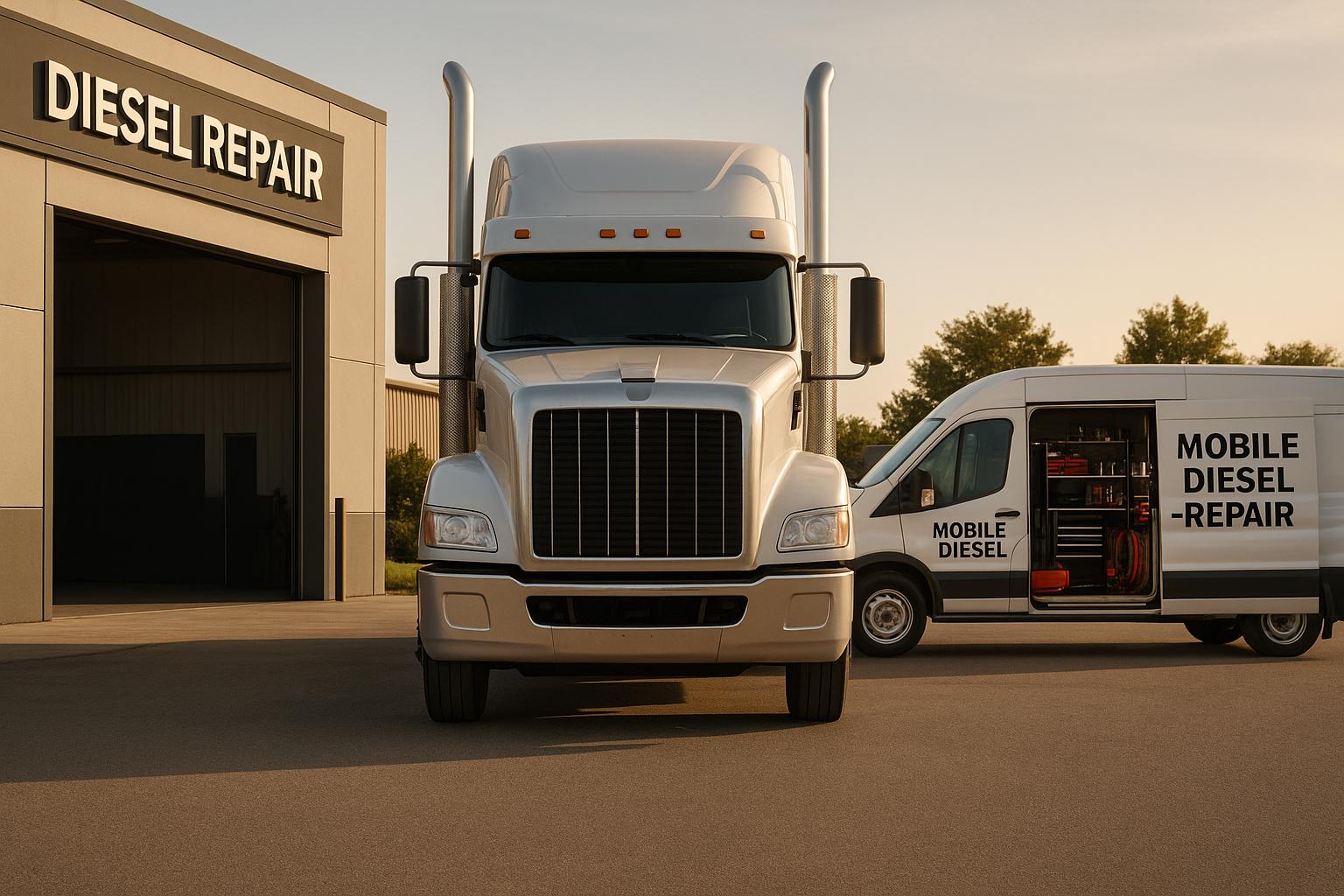
When your diesel truck breaks down, choosing between mobile repair services and a repair shop can impact your costs. Here’s the quick takeaway:
- Mobile repair saves on towing fees and reduces downtime by fixing issues on-site. Costs range from $20 to $1,000, with hourly rates between $15 and $125.
- Shop repairs are better for complex jobs like engine overhauls or transmission work, offering specialized tools and controlled environments.
Quick Overview:
- Mobile Repair: Ideal for emergencies, routine maintenance, and minor fixes. Faster service but limited to less complex issues.
- Shop Repair: Best for major repairs and diagnostics, though towing and longer downtime add to costs.
| Factor | Mobile Diesel Repair | Shop-Based Repair |
|---|---|---|
| Labor Rates | $15–$125/hour | Typically lower |
| Towing Costs | $0 (eliminated) | $100–$300 |
| Downtime | Reduced (often same-day service) | Longer (can take days) |
| Complex Repairs | Limited | Better suited for major jobs |
Use mobile services for quick, on-the-spot fixes and shop repairs for large-scale, intricate work. Balancing both options can save time and money while keeping your fleet running efficiently.
Day in the life of a mobile diesel mechanic! Big payday!
Cost Analysis: Mobile vs Shop Diesel Repair
When comparing the costs of mobile diesel repair services to traditional shop-based repairs, it’s essential to look beyond just the hourly rates. Several factors come into play that can significantly influence the total expenses involved. Let’s break down the key elements affecting overall repair costs.
Labor Rate Comparison
Mobile mechanics typically charge between $15 and $125 per hour, a range that accounts for additional on-site expenses like fuel, equipment, and travel. While these rates are often higher than those charged by standard repair shops, the overall savings can still be considerable. Why? Because mobile services eliminate the need for towing and reduce downtime, which can offset the higher hourly rate [1].
Towing and Transport Expenses
For shop-based repairs, towing is usually a necessary expense. The cost of transporting a disabled truck to a repair facility can range from $100 to $300, adding to the total repair bill. Mobile diesel repair services, on the other hand, come directly to you, completely removing this cost. This can be especially beneficial in emergencies, where towing fees might otherwise skyrocket [1].
Vehicle Downtime Costs
For commercial operators, downtime often costs more than the repairs themselves. Shop-based repairs can be a lengthy process, involving towing, vehicle drop-off, diagnosis, and scheduling repairs, which can stretch downtime to a day or longer. Mobile mechanics, however, perform repairs right where the vehicle is located, often completing the job on the same day. This quicker turnaround minimizes downtime, allowing trucks to get back on the road faster - a crucial factor for businesses [1].
Cost Comparison Chart
Here’s a side-by-side look at how the costs stack up between mobile diesel repair and shop-based repair:
| Cost Factor | Mobile Diesel Repair | Shop-Based Repair |
|---|---|---|
| Labor Rate | $15–$125 per hour | Typically lower |
| Towing Costs | $0 (eliminated) | $100–$300 |
| Downtime | Hours (often same-day service) | Often one day or more |
| Travel Time | Included in service | Customer responsibility |
Speed and Convenience Factors
When it comes to diesel truck repairs, time isn’t just money - it’s everything. The quicker repairs are completed, the sooner your truck is back on the road generating revenue. For commercial operators, this can make or break daily operations. Mobile repair services offer a level of convenience that can significantly reduce delays, helping you avoid the prolonged downtime associated with traditional repair shops.
Service Scheduling and Delivery
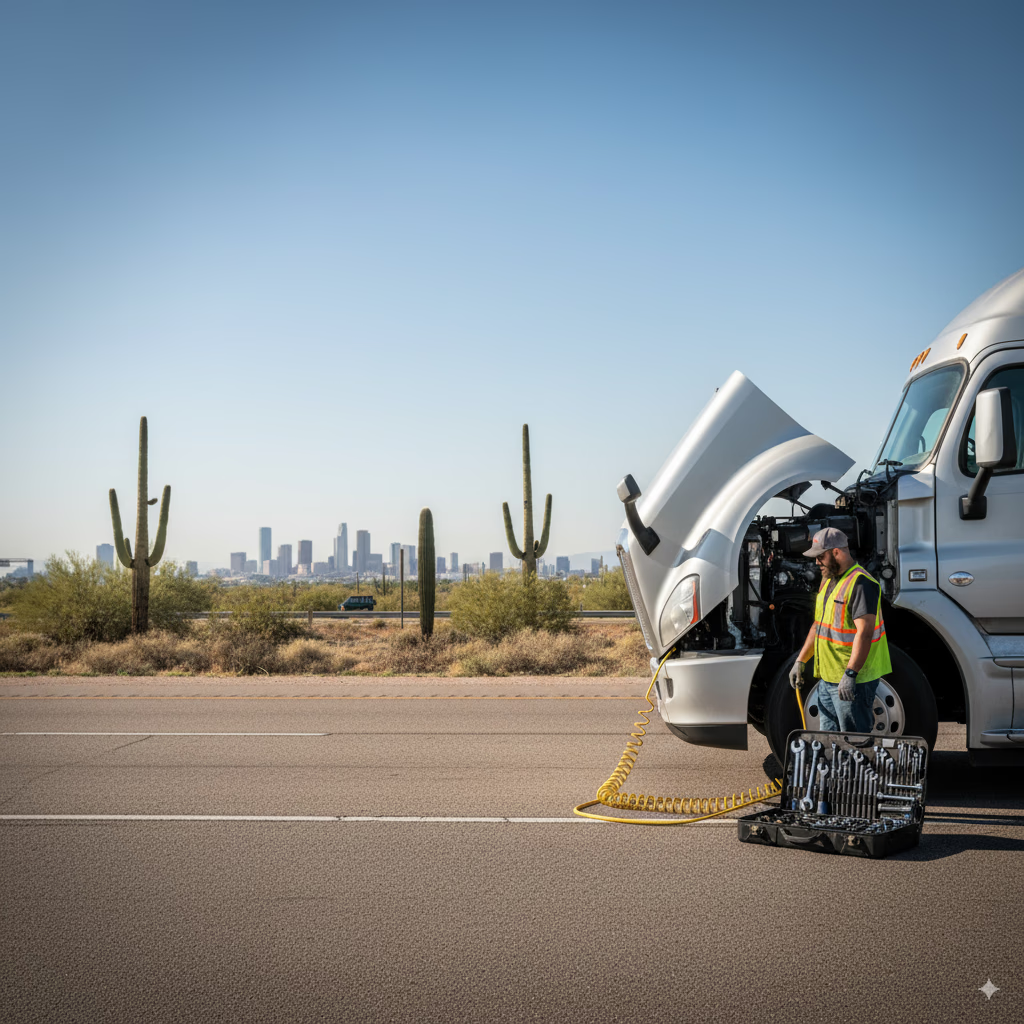
One of the biggest advantages of mobile diesel repair services is their flexibility. Unlike standard repair shops, mobile services are available 24/7 - even during evenings, weekends, and holidays. In emergencies, response times are usually within 30 to 60 minutes, and the mechanic comes directly to your location. Whether you’re stuck on the side of the highway or parked at a distribution center, help is just a call away [2][3][4]. This eliminates the hassle of arranging for towing or waiting for an available appointment.
Traditional repair shops, however, require extra steps. First, you need to arrange for towing, which can be both time-consuming and costly. Then, you’re at the mercy of the shop’s schedule, which often operates strictly during business hours. This can be a major obstacle when you need immediate assistance [3].
By cutting out these delays, mobile services help get your truck back to work faster, as we’ll explore next.
Reducing Vehicle Downtime
Mobile mechanics bring the repair shop to you, dramatically reducing downtime [2][3][4]. Once they arrive, they can immediately start diagnosing and fixing the problem - often completing repairs the same day. For fleet operators, this rapid turnaround means fewer interruptions to productivity and lower costs [2][3]. Imagine a critical shipment run where a mobile mechanic quickly restores your truck, ensuring your delivery stays on schedule and your expenses are kept in check.
In contrast, shop-based repairs typically involve multiple delays: towing, waiting for an appointment, and extended repair times. This can stretch into hours or even days, during which your truck sits idle, generating no revenue but still racking up costs.
The ability of mobile services to respond quickly is especially crucial in emergencies. Immediate repairs can turn a potential disaster into a minor inconvenience, keeping your operations running smoothly and efficiently.
sbb-itb-ea7ab41
Types of Repairs: Mobile vs. Shop Capabilities
When it comes to diesel repair, knowing which jobs are better suited for mobile services versus a shop can save both time and money. Mobile diesel repair services are convenient and efficient for many repairs, but they do have their limits due to equipment, workspace, and safety considerations. Let’s break down the types of repairs each option handles best.
Mobile Service Repair Types
Mobile repair services shine in handling emergency roadside issues. Whether it’s a dead battery, fuel system trouble, or brake problems that leave your truck stranded, mobile technicians can get you back on the road quickly.
One of the standout offerings of mobile services is engine diagnostics. Technicians arrive equipped with advanced diagnostic tools, allowing them to identify engine codes, performance issues, and malfunctions right on-site. For instance, AZ Mobile Diesel Repair brings the necessary engine diagnostic equipment directly to you, often enabling same-day fixes.
Mobile units are also well-equipped to handle brake, air system, and tire repairs. This includes tasks like brake adjustments, air line repairs, and brake chamber replacements - essential safety fixes that can be completed without a shop.
As emissions regulations become stricter, DPF cleaning and aftertreatment services have grown in importance. Mobile technicians can perform DPF cleaning, DEF system diagnostics, and related repairs on-site, helping fleet operators minimize downtime.
Other common mobile services include electrical troubleshooting, such as alternator or battery issues and wiring repairs. Additionally, cooling system repairs, fuel system servicing, and A/C repairs are often completed by mobile technicians who carry a full inventory of parts on their service trucks. This means many problems can be resolved during the first visit, saving valuable time.
Shop-Only Repair Requirements
While mobile services cover a wide range of repairs, some tasks require the specialized equipment and controlled environment of a shop.
For example, engine overhauls and replacements demand heavy lifting equipment and significant workspace, which mobile units simply can’t provide. Similarly, transmission work, including rebuilds and replacements, requires precision tools and heavy-duty machinery that are only available in a shop setting.
Heavy-duty welding and structural repairs are another area where shops excel. These tasks need proper ventilation, dedicated workstations, and specialized safety gear that mobile services cannot accommodate. Additionally, DOT inspections often require vehicle lifts and controlled conditions found in traditional repair facilities.
For complex electrical diagnostics, factory-grade scan tools are often necessary. These tools are large, expensive, and impractical for mobile operations. Likewise, major component replacements, like turbocharger installations, benefit from the precision and controlled environment of a shop.
Understanding these differences can help you choose the most cost-effective repair option. Mobile services are ideal for routine maintenance, emergency fixes, and basic diagnostics, saving you time and avoiding towing fees. However, for major rebuilds and intricate repairs, a fully equipped shop is often the better choice.
Money-Saving Scenarios for Each Option
Deciding between mobile and shop repairs can significantly impact your operating costs. Let’s dive into some practical scenarios to see how each option can save money, depending on the situation.
Emergency Roadside Breakdowns
When a diesel truck breaks down unexpectedly, mobile repairs can be a game-changer. They eliminate the need for towing and get your vehicle back on the road faster. For example, repairing a fuel system failure directly at the breakdown site is not only quicker but also avoids hefty towing expenses. Companies like AZ Mobile Diesel Repair, with response times as fast as 30–60 minutes in the Phoenix Metro area, ensure minimal downtime and help protect your revenue stream.
Regular Maintenance and Small Repairs
For routine upkeep or minor fixes, mobile services shine. Tasks like DPF cleaning, brake adjustments, air line repairs, or basic electrical troubleshooting can be handled efficiently on-site. This approach keeps your vehicles running smoothly without the hassle of scheduling shop visits or dealing with interruptions to your operations. Plus, it ensures your fleet stays compliant with regulations while avoiding unnecessary downtime.
Major Repairs and Component Replacement
When it comes to big jobs like engine overhauls or transmission rebuilds, shop repairs are often the better choice. These repairs require specialized tools, controlled environments, and trained technicians to ensure the work is done right. Shops are also better equipped for complex diagnostics involving multiple systems, thanks to their factory-grade scan tools. This reduces the likelihood of recurring issues and provides peace of mind with warranty-backed work.
Repair Scenario Comparison
Here’s a quick breakdown of how mobile and shop services stack up in different repair situations:
| Repair Type | Mobile Service Advantages | Shop Service Considerations | Recommended Option |
|---|---|---|---|
| Emergency Roadside Repairs | Fast on-site response avoids towing fees and downtime | Requires towing and longer wait times | Mobile |
| Routine Maintenance & Small Repairs | Convenient on-site servicing keeps vehicles operational | May involve scheduling and brief operational disruptions | Mobile |
| Major Repairs (Engine, Transmission) | Not ideal for extensive or highly specialized repairs | Provides specialized tools, controlled environment, and warranty support | Shop |
| Complex Multi-System Diagnostics | Handles standard issues with available diagnostic tools | Offers deeper analysis with factory-grade tools | Depends on complexity |
In time-sensitive situations, especially during peak business hours, mobile repairs offer unmatched convenience and speed, helping you avoid costly delays. On the other hand, for planned or intricate repairs during slower periods, the advanced resources available at a shop may prove to be the smarter investment. Each approach has its strengths, and understanding when to use which can help you save money and keep your fleet running efficiently.
Final Comparison and Recommendations
When deciding between mobile and shop diesel repair, it all comes down to what best suits your specific needs. Each option has its own advantages depending on the situation, whether it’s about saving time, cutting costs, or addressing the complexity of the repair.
Mobile diesel repair is a game-changer when downtime needs to be kept to a minimum. With trucks costing anywhere from $448 to $760 per day when out of service [5], mobile services can save you a lot by eliminating towing fees and getting you back on the road quickly. With response times typically ranging between 30-60 minutes, mobile repair is especially valuable during emergency breakdowns or when meeting tight delivery schedules is non-negotiable.
On the other hand, shop-based repairs are better suited for more complicated issues that need advanced tools and a controlled workspace. While towing and downtime are part of the equation, the in-depth diagnostics and warranty coverage that shops provide make them a solid choice for major overhauls and long-term reliability. Here’s a quick breakdown of how the two compare:
Mobile vs Shop Pros and Cons
| Factor | Mobile Diesel Repair | Shop-Based Repair |
|---|---|---|
| Cost Advantages | No towing fees, reduced downtime costs, lower overhead pricing | Comprehensive diagnostics prevent future issues, warranty coverage |
| Speed | Fast response (30-60 minutes), on-site repairs, minimal disruption | Slower turnaround but thorough work minimizes future problems |
| Repair Scope | Great for routine maintenance, emergency fixes, minor repairs | Best for major overhauls, complex diagnostics, and specialized rebuilds |
| Convenience | Service comes to you, flexible scheduling around routes | Requires transport to the shop and advance scheduling |
| Best Use Cases | Emergencies, quick maintenance, minor repairs | Engine rebuilds, transmission work, extensive electrical diagnostics |
For fleet managers, mobile services offer the flexibility to schedule preventive maintenance during routes, keeping operations smooth. Owner-operators, on the other hand, can save valuable time during busy periods by opting for mobile repairs. Meanwhile, shop visits are a better fit for major fixes, ensuring the depth and precision needed for big jobs. The added bonus? Mobile services available 24/7 can help avoid late delivery penalties and maintain your reputation for reliability.
The smartest approach is to use these options strategically. Rely on mobile services for emergencies, routine upkeep, and smaller repairs to keep your trucks running without delays. When it comes to major repairs or diagnostics requiring advanced tools, a shop visit is the way to go. By balancing both, you can maximize uptime and keep your operations running smoothly.
FAQs
Is mobile diesel repair more cost-effective than taking your vehicle to a repair shop for routine maintenance?
Mobile diesel repair can often be a more budget-friendly option compared to traditional shop-based services. Why? For starters, mobile repair services usually have lower operating costs. Without expenses like rent or utilities for a physical shop, these savings often reflect in more affordable labor rates.
Another big advantage is the reduction in downtime. Since the technician comes directly to your location, you can skip the hassle and expense of towing or waiting around at a repair shop. For businesses that depend on keeping their vehicles running, this can mean substantial savings in both time and money.
That said, how cost-effective mobile repair is can depend on the specific type of service or repair you need. It’s always smart to assess your particular circumstances before deciding which option works best for you.
How do mobile diesel repair services handle complex repairs while ensuring quality and reliability?
Mobile diesel repair services deliver dependable solutions for complex vehicle issues by employing highly trained, certified technicians who come prepared with advanced diagnostic tools and equipment. These experts can tackle a broad spectrum of problems, from detailed engine diagnostics to transmission repairs, all without requiring you to leave your location.
What sets these services apart is their commitment to quality. They typically use top-tier replacement parts and adhere to industry-standard procedures, ensuring the same level of precision you’d find in a conventional repair shop. By bringing the repair directly to you, they not only minimize downtime but also maintain a sharp focus on efficiency and accuracy.
How do I decide between mobile diesel repair and a repair shop for my fleet?
Choosing between mobile diesel repair and a repair shop often comes down to your specific needs and circumstances. Mobile services are perfect for quick fixes, routine maintenance, or emergencies when your fleet is on the move. The biggest advantage? They come to you, saving time and avoiding the hassle and expense of towing. That said, the convenience of mobile services can come with slightly higher costs due to travel expenses.
On the flip side, repair shops are better equipped for more complex repairs or diagnostics that require specialized tools and equipment. If your fleet operates in a set location or can handle some downtime, taking your vehicle to a shop can be a more budget-friendly option for major work.
For many, the best approach is a mix of both: mobile services for urgent or on-the-go needs and repair shops for larger, more involved fixes. Weigh your fleet’s specific requirements, location, and the type of repair to find the smart, cost-effective solution.