Emergency Breakdown Kit: What Every Trucker Should Carry
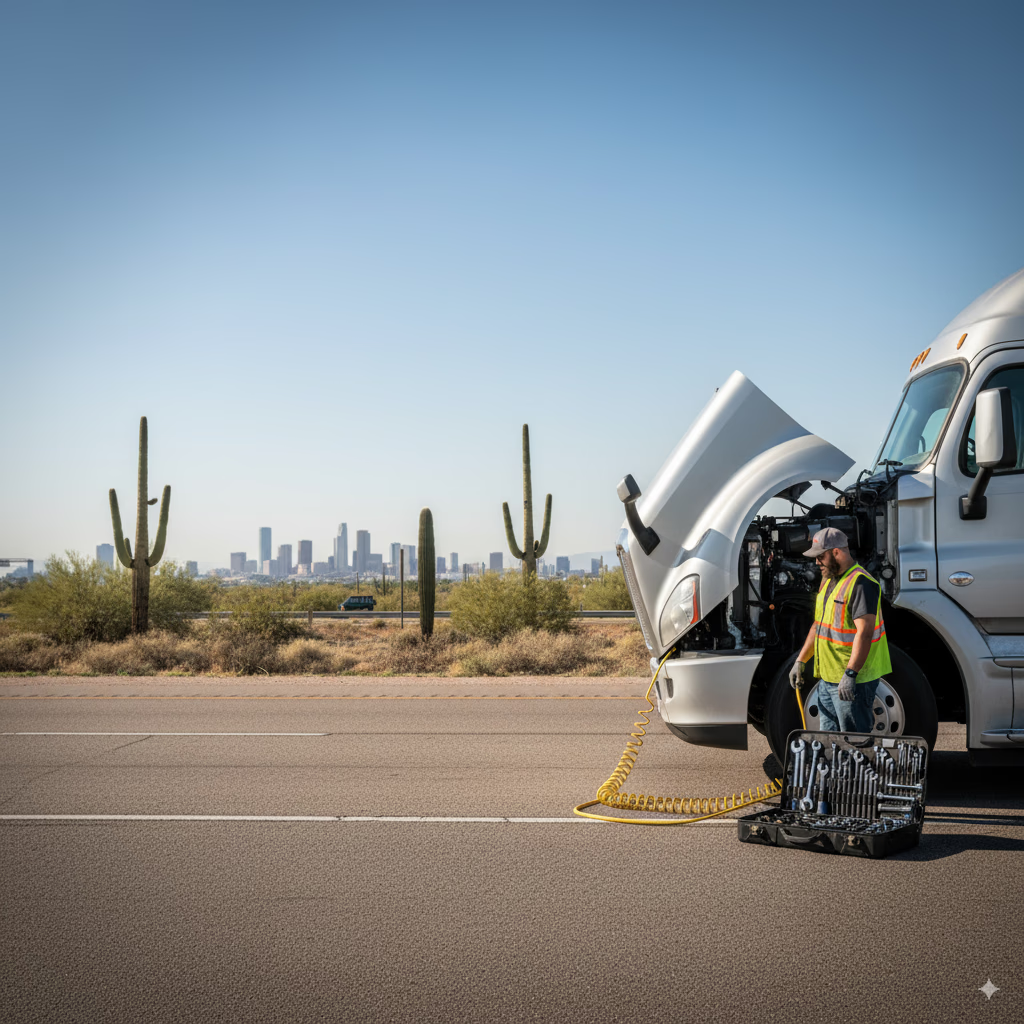
A breakdown on I-10 west of Phoenix at 2 PM in July is a very different situation than a breakdown on I-95 in Connecticut in October. The fundamentals are the same — you need to get visible, stay safe, assess the problem, and either fix it or get help — but what you need in your truck to handle each scenario varies significantly.
This guide covers the essential breakdown kit every trucker should carry, organized by category so you can build yours systematically. We’ve included Phoenix and Southwest-specific additions because if you run through Arizona regularly, the desert environment demands preparation that other regions don’t.
FMCSA-Required Emergency Equipment
Before we get to the recommended items, let’s cover what federal law actually requires you to carry. These aren’t optional — missing any of them during a DOT inspection results in a violation.
Fire Extinguisher
- Requirement: At least one fire extinguisher with a minimum rating of 5 B:C
- Placement: Mounted in a bracket, accessible, and visible
- Condition: Fully charged (check the gauge monthly), pin intact, nozzle clear
- Recommendation: Carry a 10 B:C rated extinguisher — the larger size gives you more capability for a few extra pounds
Warning Triangles
- Requirement: Three reflective warning triangles (or three fusees/flares, but triangles are reusable and don’t expire)
- Placement: Must be stored in the cab or an accessible exterior compartment
- Deployment: When stopped on a highway, place one at 10 feet, one at 100 feet, and one at 200 feet behind your vehicle on the traffic side
Spare Fuses
- Requirement: If your vehicle uses fuse-type circuits, you must carry spare fuses for each type and size used
- Note: Most modern trucks use circuit breakers rather than fuses, but check your specific vehicle
Category 1: Safety and Visibility Equipment
When you break down, your first priority is making sure other drivers can see you. A parked truck on the shoulder of a highway is a collision risk, especially at night or in poor visibility.
High-Visibility Vest (ANSI Class 2 or 3)
Wear this every time you exit the cab on a roadside. It’s inexpensive, takes up almost no space, and could save your life. Keep it within arm’s reach of the driver’s seat, not buried in a compartment.
LED Warning Lights/Beacons
In addition to your hazard flashers and the required triangles, carry:
- Magnetic LED beacon for the roof of the cab (visible for a mile+)
- LED road flares (battery-powered, reusable, far superior to traditional fusees)
- Multiple units allow you to create a visible warning zone while you work
Flashlight and Headlamp
- Heavy-duty flashlight: At least 500 lumens for inspecting under the truck and in engine compartments. LED with rechargeable batteries.
- Headlamp: Hands-free lighting is essential when you’re working under the hood or under the truck. Get one with red light mode to preserve night vision.
- Spare batteries or a charging cable: Dead lights are useless lights.
Traffic Cones (2-3)
Collapsible traffic cones take up minimal space and provide additional visibility beyond your triangles. Especially useful when you’re working on the traffic side of the vehicle.
Category 2: Basic Hand Tools
You don’t need a full mechanic’s toolbox, but a focused set of hand tools lets you handle the most common roadside issues: loose connections, minor leaks, blown fuses, and temporary patches.
Essential Tool Kit:
- Socket set: 3/8” drive with metric and SAE sockets (10mm-22mm covers most applications)
- Combination wrench set: 10mm-22mm
- Adjustable wrench: 12” (for larger fittings)
- Screwdriver set: Phillips #2, flat blade, and a stubby version of each
- Pliers: Standard, needle-nose, and locking (Vise-Grips)
- Wire cutters/strippers
- Pry bar: 12-18” flat pry bar
- Hammer: Ball-peen or dead-blow
- Tire pressure gauge: Heavy-duty, rated for truck tires (0-150 PSI)
- Multimeter: For electrical diagnosis (battery voltage, continuity checks, amperage)
Cutting and Fastening:
- Utility knife with extra blades
- Hacksaw with spare blades (for cutting hoses, bolts, or zip ties in a pinch)
- Zip ties: Assorted sizes, a bag of 100 mixed
- Hose clamps: Assorted sizes (1” through 3”)
- Wire: 14-gauge general purpose and 10-gauge for heavier applications
- Safety wire and safety wire pliers (for securing critical connections)
Tip: Organize in a Portable Toolbox
Keep your road tools in a separate, dedicated toolbox — not mixed in with shop tools that come and go. A water-resistant hard case or tool bag that fits under the bunk or behind the seat works best. When you need it, you grab one container, not hunt through the cab.
Category 3: Fluids and Consumables
Carrying the right fluids means the difference between a 15-minute fix and a tow truck call.
Engine Fluids:
- Engine oil: 1 gallon of the correct weight for your engine (15W-40 is standard for most diesel applications). Check your owner’s manual.
- Coolant/antifreeze: 1 gallon of premixed, correct formulation for your engine (don’t mix types — use what’s already in the system)
- DEF (Diesel Exhaust Fluid): 2.5-gallon jug. Running out of DEF triggers a derate. It’s cheap insurance.
- Power steering fluid: 1 quart
Fuel System:
- Spare fuel filters: One primary and one secondary filter specific to your engine. A clogged fuel filter is one of the most common roadside fixes.
- Filter wrench specific to your filter size
- Fuel primer pump (if your truck doesn’t have an electric lift pump, or as a backup)
- Small fuel container: 2-gallon DOT-approved container. Not for long-term storage — for getting enough fuel to reach a station if you miscalculate.
Lubricants and Sealants:
- Grease gun with a tube of chassis grease (NLGI #2)
- Penetrating oil (PB Blaster or equivalent) — essential for frozen bolts
- RTV silicone sealant (high-temp, black)
- Thread sealant tape (Teflon tape for air and fuel fittings)
- Dielectric grease (for electrical connections)
Tape and Adhesives:
- Duct tape: A full roll (the universal temporary fix)
- Electrical tape: Multiple rolls
- Silicone self-fusing tape: Wraps around itself to seal leaks on hoses and pipes without adhesive. Handles 500+ degree temps.
- High-temp exhaust tape/wrap: For temporary exhaust leak repairs
Category 4: Electrical and Battery Supplies
Electrical problems are the second most common cause of roadside breakdowns after tire issues. Carry supplies to handle basic electrical diagnosis and repair.
Battery Supplies:
- Jumper cables: Heavy-duty, 2/0 gauge, at least 20 feet long. Diesel trucks need thicker cables than automotive-grade.
- Battery terminal cleaner: Wire brush type that cleans both the post and the clamp
- Battery terminal protectant spray
- Spare battery cables: One positive, one negative, pre-terminated with ring connectors
- Battery load tester (handheld digital type — optional but extremely useful)
Wiring Supplies:
- Assorted blade fuses (5A through 30A)
- Maxi fuses (20A through 60A) if your truck uses them
- Butt connectors and ring terminals (assorted, with heat-shrink versions preferred)
- Crimp tool
- Assorted wire (10-gauge, 14-gauge, 18-gauge, 5-foot lengths of each)
- Heat-shrink tubing (assorted sizes)
Lighting:
- Spare bulbs for all exterior lights on your truck and trailer (or spare LED units if you’ve converted)
- Pigtail connector for trailer 7-pin connection (these fail frequently)
- Electrical contact cleaner spray
Category 5: Tire and Wheel Supplies
Tire-related breakdowns are the most common roadside event for commercial vehicles. While most drivers call for tire service on blowouts, carrying basic tire supplies helps with the situations you can handle yourself.
Essentials:
- Tire pressure gauge: Truck-rated (0-150 PSI), preferably digital for accuracy
- Lug wrench (correct size for your wheels — typically 33mm for most commercial trucks)
- Torque multiplier or cheater bar: Lug nuts at 450-500 ft-lbs are nearly impossible to break loose with just a standard wrench
- Wheel chocks: Two minimum (FMCSA required when parked on a grade)
- Tire thumper or tire billy: Quick way to check inflation on dual assemblies during pre-trip
Repair Supplies:
- Tire plug kit: For minor tread punctures (temporary repair to get to a tire shop)
- 12V portable air compressor: Truck-rated, capable of inflating to 100+ PSI. Many standard portable compressors can’t handle truck tire pressures.
- Valve stems and valve cores: Plus a valve core removal tool
- Bead sealer (for minor bead leaks)
Important Note on Tire Repairs:
A tire plug is a temporary repair. FMCSA regulations and industry standards require a proper internal patch for a permanent repair. Get any plugged tire to a tire shop within 24 hours for proper repair or replacement.
Category 6: Personal Safety and Survival Supplies
This is where Phoenix and Southwest trucking demands specific preparation. A breakdown in the desert during summer is a genuine survival situation if you’re not prepared.
Hydration (Critical for Phoenix/Arizona):
- Water: Minimum 2 gallons per person in the cab. In Phoenix summer, you can become dangerously dehydrated within 1-2 hours of working outside in 115-degree heat.
- Electrolyte packets: Gatorade powder, Liquid IV, or similar. Water alone isn’t enough when you’re sweating heavily.
- Insulated water bottle: Keeps water cool much longer than plastic bottles that heat up within minutes in a hot cab.
Heat Protection (Phoenix-Specific):
- Shade canopy or pop-up tent: A small 6x6 pop-up shade provides a massive difference when working outside in direct sun. Stores compactly.
- Cooling towels: Wet them and drape around your neck. Evaporative cooling is effective in Arizona’s dry heat.
- Wide-brim hat: Better than a baseball cap for sun protection on your neck and ears.
- Sunscreen: SPF 50+. Reapply every 2 hours when working outside.
- Sunglasses: UV-rated. Glare off desert pavement and chrome is intense.
First Aid:
- First aid kit: Commercial-grade, not a dollar-store kit. Should include:
- Adhesive bandages (assorted sizes)
- Gauze pads and rolls
- Medical tape
- Antibiotic ointment
- Burn cream (especially important around diesel engines and exhaust)
- Eye wash solution
- Tweezers
- Scissors
- Nitrile gloves (box of 50)
- Over-the-counter pain reliever (ibuprofen, acetaminophen)
- Tourniquet: A proper CAT or SOFTT-W tourniquet. Commercial truck components can cause severe lacerations.
General Survival:
- Non-perishable food: Protein bars, nuts, crackers. Enough for 24 hours.
- Blanket or sleeping bag: Even Phoenix gets cold on winter nights (40-50 degrees Fahrenheit), and if you’re broken down overnight, staying warm matters.
- Rain poncho: Monsoon season (July-September) brings sudden, violent storms.
- Trash bags: Multiple uses — rain protection, ground cover, waste disposal.
- Work gloves: Heavy-duty leather or mechanic’s gloves. Touching metal components in Phoenix summer causes instant burns.
Category 7: Communication and Documentation
When you can’t fix it yourself, getting help quickly depends on communication.
Communication:
- Cell phone with car charger and a backup battery pack: This is your lifeline. Keep it charged at all times.
- CB radio: Still valuable for communicating with other truckers, especially in areas with poor cell coverage (common in rural Arizona between Phoenix and Flagstaff on I-17, or west of Phoenix on I-10 toward California).
- Emergency contact list: Written on paper, not just in your phone. Include:
- Your carrier’s dispatch/breakdown number
- Your insurance company’s roadside assistance number
- A reliable mobile diesel repair service (like AZ Mobile Diesel Repair at (602) 456-9071 for Phoenix Metro)
- Local towing companies along your common routes
- Your emergency personal contact
Documentation:
- Notepad and pen: For recording what happened, what you’ve checked, and any information the repair service needs.
- Camera (phone): Photograph the breakdown scene, any damage, warning lights on the dash, and the condition of failed components. This documentation helps the repair tech and your carrier’s maintenance records.
- Insurance and roadside assistance cards: Keep physical copies accessible, not buried in paperwork.
Building Your Kit: Where to Store Everything
Space is precious in a commercial truck. Here’s how experienced drivers organize their breakdown kit:
Behind the Seat / Under the Bunk:
- Tool kit (hard case or bag)
- Electrical supplies bag
- Fluids and filters (in a spill-proof container)
- First aid kit
Side Boxes (If Equipped):
- Jumper cables
- Fire extinguisher (mounted and accessible)
- Warning triangles
- Tire supplies
- Pop-up shade
- Water supply
In the Cab (Accessible While Driving):
- High-visibility vest (within arm’s reach)
- Flashlight
- Cell phone charger
- Water bottle
- Emergency contact list
Trailer (For Team or Dedicated Trailer Operations):
- Spare light bulbs and pigtail
- Extra warning triangles
- Spare gladhand seals
- Landing gear handle (if removable type)
Seasonal Kit Adjustments for Phoenix Drivers
Summer (May-October):
- Double your water supply — 4 gallons minimum
- Add electrolyte packets to every water container
- Shade canopy is essential, not optional
- Work gloves for every task — metal surfaces cause contact burns
- Check fluid levels more frequently — heat accelerates evaporation and consumption
- Carry extra coolant — overheating is far more common in summer
- DEF degrades faster in heat — check quality and replace if it’s been sitting in a hot compartment for months
Winter (November-April):
- Add a warm jacket and blanket — overnight lows can drop below freezing in northern Arizona
- Check your battery more frequently — cold mornings after hot days stress batteries
- Carry fuel additive — anti-gel treatment for trips to Flagstaff or other high-elevation routes where temps drop significantly
- Replace windshield washer fluid with a winter formula for higher elevations
Monsoon Season (July-September):
- Rain poncho and waterproof boot covers
- Extra caution with electrical systems — water intrusion during heavy rain causes shorts
- Watch for flash flooding — never park in a wash or low-lying area during monsoon storms
When to Call a Professional
A well-stocked breakdown kit handles the basics: a dead battery, a blown fuse, a loose connection, low fluids, or a flat tire. But many diesel truck breakdowns involve issues that require professional diagnostic equipment, specialized tools, or replacement parts that aren’t practical to carry.
Call for emergency roadside assistance when:
- The engine won’t start and basic battery/fuel checks don’t reveal the cause
- You see warning lights for the aftertreatment system — DPF, DEF, or SCR issues require diagnostic software
- Brake problems — air leaks, failed compressors, or ABS faults need professional attention
- Electrical problems beyond fuses — alternator failure, wiring harness issues, or ECM problems
- Anything involving the turbo, fuel injection system, or internal engine components
- You’re on a deadline and can’t afford to troubleshoot — a mobile mechanic can diagnose and fix while you rest or handle logistics
AZ Mobile Diesel Repair covers the entire Phoenix Metro area with fully equipped service trucks. We carry diagnostic software for every major engine platform, common replacement parts, and the tools to handle everything from battery swaps to forced DPF regens on-site.
Call (602) 456-9071 for same-day mobile diesel repair service, 7 days a week, 7 AM to 7 PM.