5 Signs Your Diesel Engine Needs Immediate Repair
When your diesel engine starts showing warning signs, ignoring them can lead to costly repairs or even complete engine failure. Here are five critical issues to watch for:
- Hard Starting or Slow Cranking: Struggling to start? This might indicate battery, starter, or cold-weather-related problems.
- Unusual Exhaust Smoke: Excessive black, white, or blue smoke signals fuel, coolant, or oil issues that need urgent attention.
- Loss of Power: Sluggish acceleration or reduced performance often points to clogged filters, fuel system problems, or turbocharger issues.
- Strange Noises: Knocking, grinding, or squealing sounds can indicate worn or misaligned engine components.
- Overheating or Warning Lights: Rising temperature gauges or dashboard alerts suggest coolant leaks or overheating, which can cause severe damage.
Key Takeaway: Addressing these symptoms early can save you thousands in repair costs and prevent major disruptions to your vehicle and business. Don’t ignore the signs - consult a professional mechanic as soon as possible.
Signs Your Diesel Truck Needs Maintenance
1. Engine Won’t Start or Cranks Slowly
When your diesel engine struggles to start or doesn’t start at all, it’s often a sign of a deeper problem that needs attention.
Symptoms
Here’s what to watch for: the engine might crank but fail to start, or it could crank sluggishly before finally coming to life. Sometimes, there’s no crank at all when you turn the key. A clicking noise usually points to a weak battery, while grinding sounds can mean the starter gears aren’t aligned properly. If you notice extended cranking along with more white smoke - especially on cold mornings - it’s another red flag. These symptoms often trace back to issues with the battery or the starter system.
Causes
The most common culprit is a weak or dead battery. Diesel engines require a lot more power to start compared to gas engines, and cold weather makes it even tougher. Low temperatures can drain battery capacity, leaving your engine struggling to fire up [1][2][3].
2. Too Much Smoke or Wrong Color Exhaust
Diesel engines are known for producing minimal exhaust smoke under normal conditions, so any excess or unusual color in the exhaust is a clear sign that something might be wrong.
Symptoms
Typically, diesel exhaust is nearly invisible. But when issues arise, you might notice thick clouds of smoke in various colors:
- Black smoke often appears as dense plumes, especially during heavy acceleration or when the engine is under stress.
- White smoke can show up as thick, billowy clouds, particularly during a cold start. While some white smoke is normal when the engine is cold, it should disappear as the engine warms.
- Blue smoke has a bluish tint and is usually accompanied by a distinct burning oil smell, which might even be noticeable inside the cab.
These smoke issues can occur during startup, acceleration, or idling, depending on the underlying problem.
Causes
The color of the smoke provides valuable clues about the issue:
- Black smoke means the engine is getting too much fuel and not enough air. This imbalance might be caused by faulty fuel injectors, a dirty air filter, or a malfunctioning turbocharger.
- White smoke suggests that coolant is leaking into the combustion chamber. This could result from a blown head gasket, a cracked cylinder head, or other internal damage. A small amount of white smoke during a cold start is normal, but if it persists after the engine warms, there’s likely a problem.
- Blue smoke points to engine oil entering the combustion chamber. This could happen due to worn piston rings, failing valve seals, or damaged turbocharger seals, allowing oil to burn where it shouldn’t.
Risks of Ignoring
Ignoring excessive or discolored exhaust smoke can lead to serious engine problems. For example:
- Persistent black smoke can indicate inefficiencies that may damage parts of the exhaust system, like the diesel particulate filter.
- Ongoing white smoke could mean coolant is mixing with engine oil, which compromises lubrication and can cause severe engine damage.
- Blue smoke often signals increased oil consumption, which, if left unchecked, can worsen as internal components deteriorate further.
Addressing these issues promptly can help prevent escalating damage and costly repairs.
Recommended Actions
If you notice thick white or blue smoke, it’s best to stop driving immediately and consult a professional mechanic. For black smoke, you can drive cautiously to a repair shop, but avoid heavy acceleration or high loads until the problem is diagnosed.
Checking oil and coolant levels might provide some clues about the issue, but a professional diagnosis is essential to pinpoint the cause and prevent minor problems from snowballing into major repairs. Paying attention to these warning signs and acting quickly can save you from significant headaches and expenses down the road.
3. Engine Lacks Power or Accelerates Poorly
If your diesel engine feels sluggish when accelerating - especially during tasks like hauling heavy loads, climbing steep hills, or towing a trailer - it’s a clear sign something’s off. This drop in performance doesn’t just hurt efficiency; it could also be an early warning of more serious engine problems ahead.
sbb-itb-ea7ab41
4. Strange Engine Sounds
Strange engine noises are often a clear sign that something inside your diesel engine isn’t working as it should. While performance issues may hint at trouble, unusual sounds like knocking, grinding, squealing, or rattling are more direct warnings. A diesel engine is designed to run smoothly and consistently, so when you hear these irregular noises, it’s a signal that internal wear or damage might be developing.
Symptoms
These sounds can take several forms: metallic knocking, grinding during startup, high-pitched squeals from belts, or unexpected rattling. Pay close attention to when these noises occur, as their timing can often reveal the root of the problem. Understanding these sounds is essential because they often point to specific mechanical misalignments or wear.
Causes
Unusual engine noises usually stem from worn-out or improperly aligned parts. For instance:
- Knocking: This can indicate incorrect fuel injection timing or worn bearings.
- Grinding or squealing: Often linked to issues with the starter, flywheel, belts, or pulleys.
These sounds mean that some components aren’t functioning as smoothly as they should, and they shouldn’t be ignored.
Risks of Ignoring
Letting these noises persist without action can lead to more severe damage. What might start as a minor issue could snowball into expensive repairs or even complete engine failure[2]. Delays in addressing these problems only increase the risk and the repair costs.
Recommended Actions
If your engine starts making strange noises, don’t wait - get it checked by a professional diesel mechanic right away[2]. Experts can use diagnostic tools to analyze the engine under various conditions and inspect critical parts like the fuel system, engine mounts, and internal components for wear or misalignment. Tackling these issues early can save you from major headaches and hefty repair bills down the road.
5. Engine Runs Too Hot or Warning Lights Come On
If your diesel engine starts running too hot or warning lights pop up on your dashboard, it’s a clear signal that something’s wrong and needs your attention right away. Diesel engines come equipped with monitoring systems designed to alert you when temperatures get dangerously high.
Symptoms
The first thing you’ll likely notice is your temperature gauge creeping into the red zone on the dashboard. As Diesel Components, Inc. puts it:
“Rising Temperature Gauge: The most apparent sign is when the temperature gauge moves into the red zone.” [4]
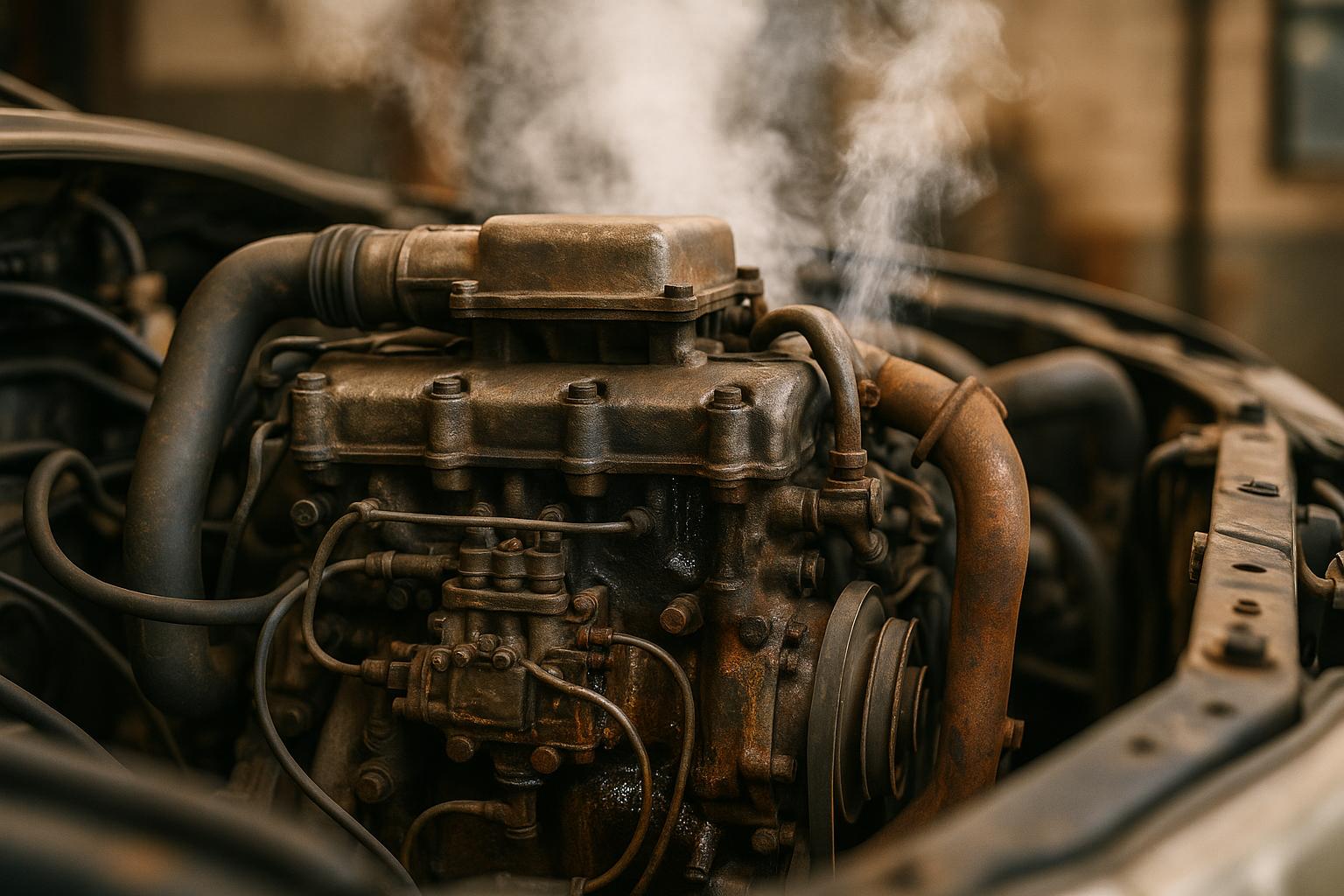
Modern diesel trucks also come with multiple alerts, including warning lights, low coolant indicators, and even audible alarms when the engine gets too hot [5][6]. In some cases, you might even see steam escaping from under the hood - an unmistakable sign of overheating.
Risks of Ignoring
Ignoring these warnings can lead to serious consequences. If the engine gets too hot, its built-in safety measures might kick in, potentially shutting it down without warning. Worse, continued overheating could cause lasting mechanical damage, making repairs far more expensive.
Recommended Actions
If you notice the temperature gauge rising, warning lights flashing, or hear audible alarms, pull over as soon as it’s safe and turn off the engine. It’s important not to open the radiator cap while the engine is still hot - pressurized coolant can spray out and cause serious burns. Once the engine has cooled down, check the coolant level, and contact a professional diesel mechanic for further assistance.
Quick Reference Table
Here’s a quick summary of the exhaust smoke indicators we’ve covered. For more detailed explanations, check out Section 2.
| Exhaust Smoke Color | Primary Cause | Indicated Problem |
|---|---|---|
| White Smoke | Coolant leakage (like a blown head gasket) | Risk of internal engine damage |
| Black Smoke | Excess fuel or poor combustion (e.g., faulty injectors, clogged air filter) | Inefficient combustion and possible harm to the emissions system |
| Blue Smoke | Oil leakage (such as worn piston rings or failing valve seals) | Increased oil consumption and signs of internal wear |
Spotting these signs early can save you from expensive repairs. Use this table as a reminder to act fast if you notice unusual smoke.
Conclusion
Your diesel engine doesn’t fail without warning - it gives you signs. Starting issues, unusual exhaust smoke, power loss, strange noises, and overheating are all signals that something isn’t right. Ignoring these can quickly turn small, manageable repairs into costly disasters. Beyond the damage to your engine, these problems can wreak havoc on your operations and finances.
The difference between addressing a minor issue promptly and waiting until it escalates is massive. What might start as a repair costing a few hundred dollars can snowball into a major engine failure requiring a rebuild or even a full replacement. If metal shavings circulate through your engine, for example, the resulting wear can lead to catastrophic damage. Replacing an engine can cost tens of thousands of dollars. On top of that, a breakdown can leave you stranded, piling on expenses like lost revenue, missed deadlines, and a hit to your customer relationships.
Unplanned downtime is more than an inconvenience - it’s a financial burden that ripples through every part of your business, far exceeding the initial repair costs.
The best approach? Call in professional mobile diesel repair services at the first sign of trouble. Mobile technicians can come to you, saving you from costly towing fees and minimizing downtime. Many offer same-day service with response times as quick as 30–60 minutes, helping you tackle issues before they spiral out of control.
Diesel engines are built to endure, but they need your attention to stay in peak condition. Don’t wait - act quickly when you notice these warning signs. Your engine, your wallet, and your business will thank you.
FAQs
::: faq
What problems can unusual exhaust smoke from my diesel engine cause if ignored?
Unusual exhaust smoke can signal serious trouble brewing in your diesel engine. If left unchecked, it might escalate into problems like engine failure, higher fuel consumption, or damage caused by oil or coolant leaks.
Catching the issue early can save you from expensive repairs and help maintain your engine’s efficiency. If you spot excessive smoke, don’t wait - have a professional inspect your engine right away. :::
::: faq
What do different strange noises from my diesel engine mean?
Strange noises coming from your diesel engine can be a warning sign of different problems, depending on the type of sound. For example, knocking, grinding, or banging noises might indicate issues like damaged connecting rods, worn-out engine gears, piston slap, or faulty bearings. Meanwhile, pinging sounds could stem from leaking fuel injectors, and clunking noises often suggest wear in the main or rod bearings.
Hearing anything unusual? Don’t wait too long to act. Ignoring these sounds could lead to serious engine damage or expensive repairs later on. It’s always a good idea to consult a professional diesel mechanic to pinpoint the problem and get it fixed quickly. :::
::: faq
What should I do if my diesel engine overheats or the dashboard warning lights come on?
If your diesel engine starts to overheat or warning lights pop up on your dashboard, the first thing you should do is turn off the engine immediately. Ignoring these signs and continuing to drive could result in serious problems, including engine failure or expensive repairs.
Once the engine is off, let it cool down completely before you do anything else. Avoid opening the radiator cap while the engine is still hot - this can be extremely dangerous and may cause severe burns. After the engine has cooled, check the coolant level and look for any visible leaks. To ensure the problem is properly handled, reach out to a professional diesel repair service as soon as possible to get it inspected and fixed. :::